Follow along with the video below to see how to install our site as a web app on your home screen.
Note: This feature may not be available in some browsers.
Registration is easy and free!
Welcome to the National Parks USA forum! Registered members can download resources for free and use the forum without advertising banners. Click here for free registration. After registration, check your mailbox and confirm your email address.
Drivers should expect smoke Impacts from wildfire along US Highway 41
Read more
Show less
Smoke from a current wildfire in the area may impact visibility along U.S. Highway 41. Drivers should use caution and be prepared for changing conditions, including possible closures.
Park Closure
Current Alerts and Conditions
Read more
Show less
Be sure to review the Alerts and Conditions below before and during your visit for additional, up-to-date information on closures, cautions, and other current park conditions.
Caution
Roadwork may cause delays on US 41/Tamiami Trail
Read more
Show less
Current roadwork is ongoing along the park's northern boundary on US Highway 41/Tamiami Trail to raise the road for Everglades Restoration benefits. Drivers may experience up to 15-minute delays and should watch for personnel, equipment and slow downs.
Information
For entrance fees, we accept digital passes and credit/debit cards
Read more
Show less
Digital passes or credit/debit cards are the ONLY method of payment at all fee collection areas. Pre-paid digital passes are available online and may be purchased in advance.
Browse nearby accommodations around Everglades National Park.
Browse nearby accommodations around Everglades National Park.
National Park
Everglades National Park
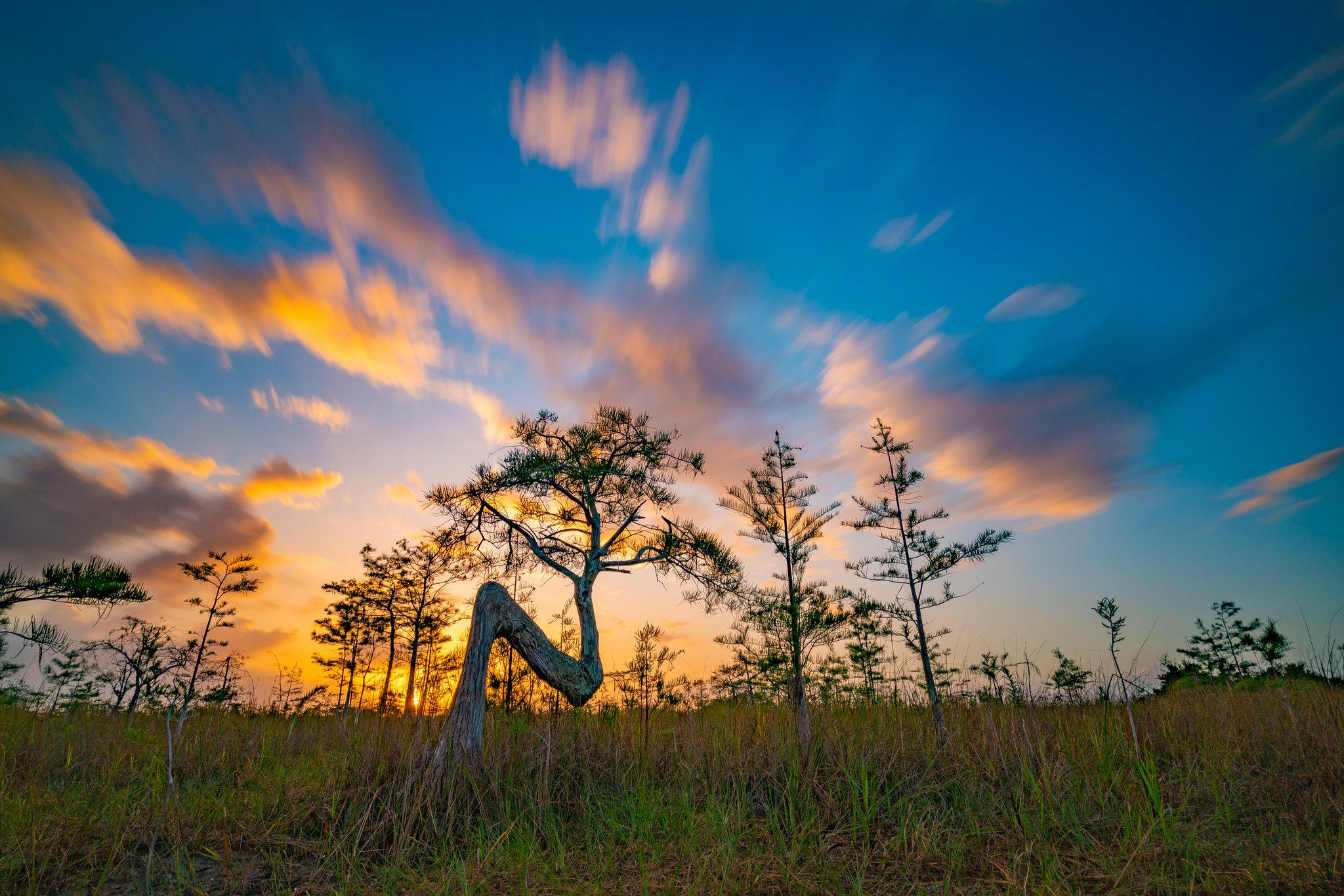
Everglades National Park protects one of America’s most extraordinary subtropical wilderness areas, stretching across 1.5 million acres of wetlands, sawgrass prairies, mangrove forests, tropical hardwood hammocks, coastal waters, and Florida Bay. Located in South Florida within reach of Miami and the Florida Keys, the Everglades offer a completely different national park experience built around water, wildlife, and vast open landscapes.
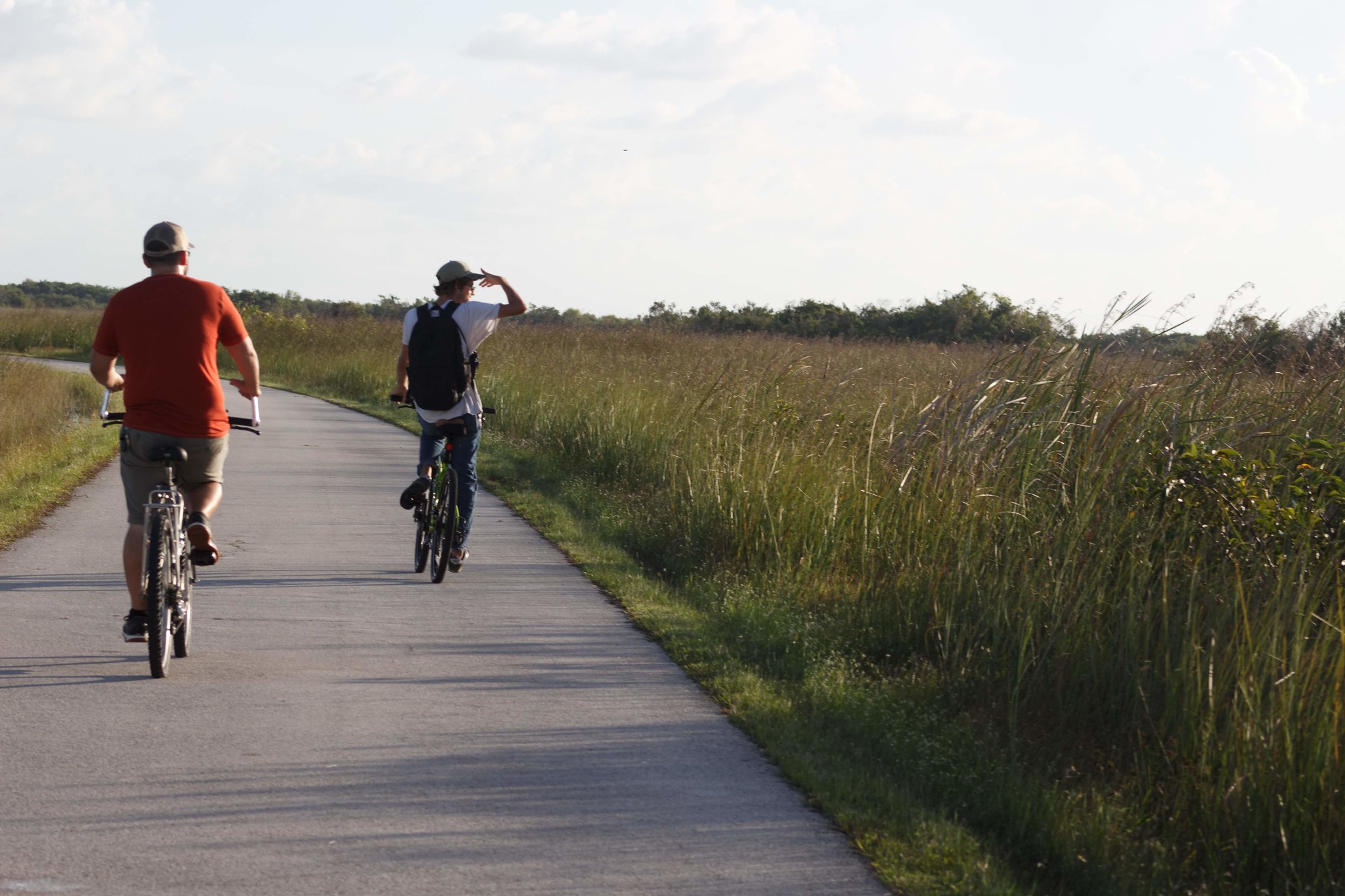
Wildlife watching is one of the biggest reasons to visit Everglades National Park. Alligators are among its most recognizable residents, but the park also provides habitat for crocodiles, manatees, turtles, wading birds, and an enormous variety of other animals. Areas such as Royal Palm and the Anhinga Trail offer accessible opportunities to explore wetland habitat, while Shark Valley combines wildlife viewing with a 15-mile loop into the famous River of Grass.
Paddling is another outstanding way to experience the Everglades. Canoe and kayak routes pass through freshwater marshes, mangrove forests, the Ten Thousand Islands, and the waters of Florida Bay. Visitors can bring their own equipment, rent boats at selected locations, or explore with an authorized guide. Boat tours, tram tours, fishing trips, birdwatching excursions, photography tours, and authorized airboat experiences provide additional ways to discover the ecosystem.
Flamingo, at the southern end of the park road from Homestead, provides access to Florida Bay along with boating, paddling, camping, and lodging. On the western side, Everglades City serves as a gateway to the Gulf Coast and Ten Thousand Islands.
Visitors can stay inside the park at Flamingo Lodge, in houseboats, glamping tents, or campgrounds, while Homestead, Everglades City, Miami, and other South Florida communities offer additional hotels and vacation accommodations.
Whether you are planning a day trip from Miami, a wildlife-focused vacation, an Everglades airboat or boat tour, or several days of paddling and exploring, choosing the right entrance and activities is essential to experiencing the remarkable diversity of Everglades National Park.
Everglades National Park is located in South Florida and has three main entrance areas near Homestead, Miami, and Everglades City. These entrances are not connected by roads inside the park, so choosing the correct entrance before departure is essential.
For the southern Everglades, travelers from Miami typically drive south toward Homestead and Florida City before following State Road 9336 to the Ernest F. Coe Visitor Center. This route continues through the park toward Royal Palm and Flamingo.
Shark Valley is reached separately from the Miami area via the Tamiami Trail and provides access to the Shark Valley loop, wildlife viewing, biking, and tram tours. The Gulf Coast section is accessed from Everglades City on Florida’s west coast and is a gateway for exploring mangrove waterways and the Ten Thousand Islands.
A car is the most practical way to explore because distances are considerable and there is no public transportation connecting destinations inside the park. Navigate to your specific entrance or visitor center rather than simply searching for “Everglades National Park.”
Everglades National Park has a subtropical climate defined by two main seasons rather than the traditional four seasons found across much of the United States. The dry season generally lasts from December through April, while the wet season typically extends from May through November.
The dry season brings mild, relatively dry weather and is the most popular time to visit. Lower water levels can concentrate wildlife around remaining wetlands, creating excellent opportunities for observing alligators, wading birds, and other animals. Comfortable temperatures also make hiking, biking, paddling, and wildlife viewing more enjoyable.
The wet season is hotter, more humid, and much rainier. Frequent thunderstorms, high water levels, intense heat, and large numbers of mosquitoes can affect outdoor activities, although the landscape becomes lush and dramatically different from winter.
For many first-time visitors, the dry season offers the most comfortable conditions. However, both seasons reveal different sides of the Everglades. Check current weather, water conditions, and storm forecasts before exploring.
Information & Disclaimer
National Parks Explorer strives to present accurate and up-to-date information collected from official and trusted sources, including the National Park Service. While we make every effort to keep this information current, information may be incomplete, inaccurate, outdated or subject to change without prior notice, including access requirements, permits, reservations, operating hours, alerts, fees, road and trail conditions, weather and other visitor information.
Read more
Read less
Always verify the latest information with the relevant official source before making travel plans, reservations, purchases or visiting a park.
National Parks Explorer is an independent information platform provided through national-parks-usa.com and is not affiliated with or endorsed by the National Park Service or other data providers. All information is provided for general informational and planning purposes only and is used entirely at your own risk. To the fullest extent permitted by applicable law, National Parks Explorer and national-parks-usa.com cannot be held responsible or liable for any loss, damage, injury, inconvenience, missed reservation, travel disruption, financial loss, additional expense or other costs resulting from the use of, or reliance upon, information provided through this website.
This site uses cookies to help personalise content, tailor your experience and to keep you logged in if you register.
By continuing to use this site, you are consenting to our use of cookies.