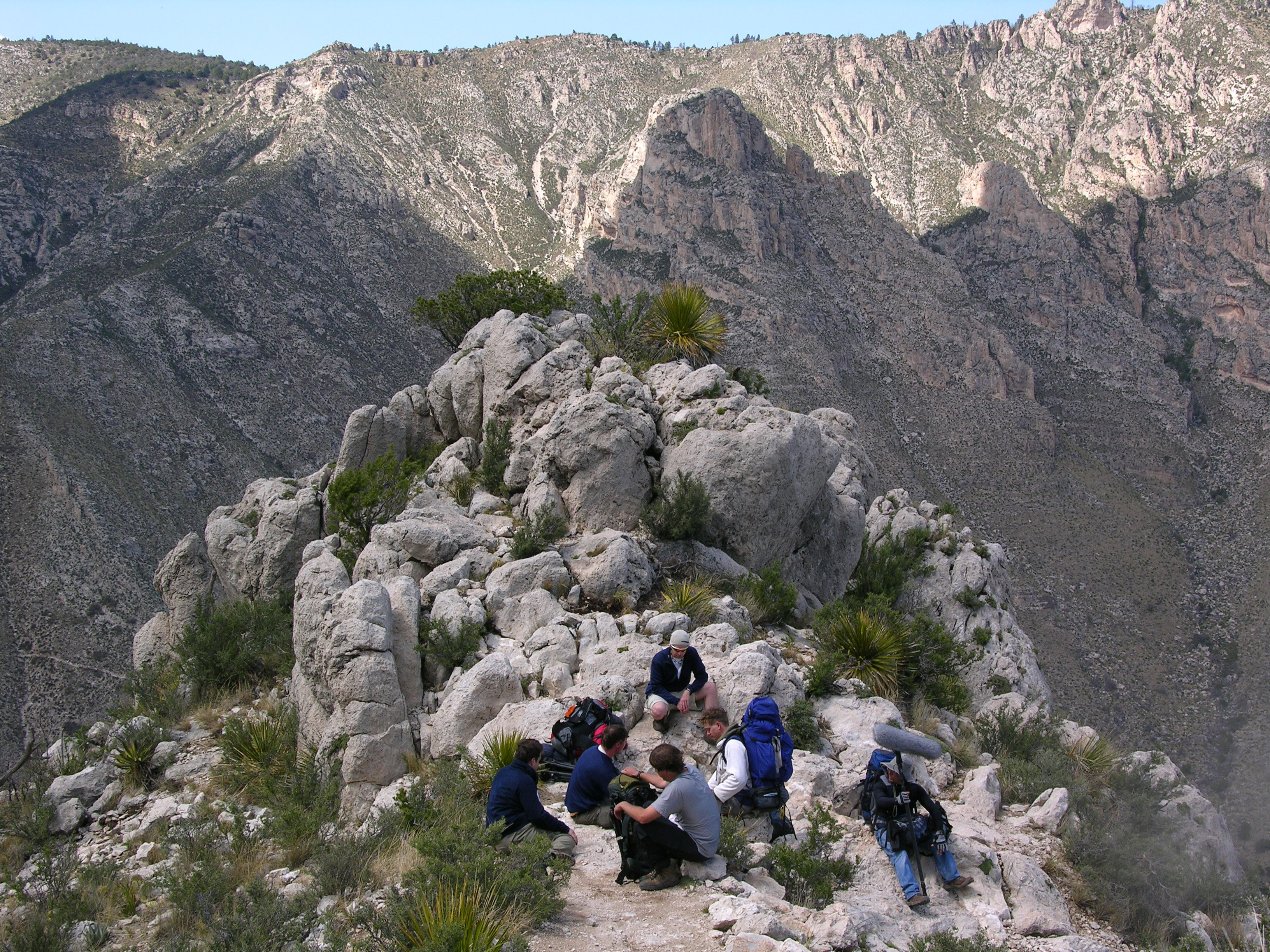
In order to protect sensitive ecosystems and limit the impacts on the natural landscape and other visitors, day-use hiking groups may not be larger than twenty persons on any park trails. Day hiking groups exceeding twenty persons are asked to divide into smaller groups and stagger start times at least an hour or divide and hike different trails at different trailhead areas.
BRINGING A LARGE GROUP TO THE GUADALUPE MOUNTAINS REQUIRES PLANNING AND A SPECIAL PERMIT
A special use permit is required for activities that benefit an individual, group, or organization rather than the public at large, including day hiking groups numbering twenty persons or more.
Please contact the Special Use Coordinator at 915-828-3251 ext 2300 or visit the park website to learn more about the Special Use Permit process. Plan ahead! Most applications require a minimum of 3 weeks to fully process.
After favorable review of your application, a Special Use Permit will be prepared and mailed to you for signature. Upon receipt, you will need to review, sign, and return the permit to our office for final approval. After the permit is approved, we will send you an authorized copy including restrictions and regulations the group must follow. The approved permit must be in your possession at the time of your event.
GROUPS HAVE A LARGER IMPACT ON THE WILDERNESS AND WILDLIFE
Trail Impacts: Hiking in larger groups compounds our footprints.
Scaring Wildlife: Larger groups make more noise and are likely to scare off wildlife. This disturbs the natural habits of animals and (from a selfish perspective) means we won’t get to see these animals in their natural setting.
GROUPS HAVE A LARGER IMPACT ON OTHER VISITORS
We often go into wilderness partly to escape the intrusions of other people. Crossing paths with a large group of noisy hikers can detract from the wilderness we came to enjoy. According to the Wilderness Act, a designated wilderness area must pose “outstanding opportunities for solitude.”
For more ideas about minimizing your impact on other visitors, check out what Leave No Trace has to say on the subject.
SOLUTIONS FOR LARGE GROUPS?
The point of group size limits is to avoid the impacts of large groups on the trail and the environment of the park. As with other wilderness regulations, sidestepping the rule ends up hurting the wilderness place we all want to enjoy. So what’s the solution?
- Plan ahead and prepare: Learn the size limits for the area you’d like to visit ahead of time and avoid the problem.
- If you have a group that’s too large, take two separate trips from different trailheads. Smaller groups provide for a better trip all-around.
- If you have a group that’s too large, divide into smaller groups and stagger start times at least an hour for each smaller group.
KNOW THE LIMITS OF YOUR GROUP
Health Considerations*: Find out if you or any group members have health conditions which may limit the kind of activity you can participate in? Do you have any mental or physical disabilities that should be considered? Do you have a medical conditions that could be worsened by certain activities or changes in altitude (asthma, heart condition)?
* Consult a physician if you have any questions on fitness levels, health conditions, or medications required
Required Medication: Determine if you or any group members have medical considerations. Will you need to bring medications with you on the trip (e.g. inhalers)?
Skill: Determine the skill level needed to safely enjoy the activity you picked. Do you and you group members have the right skill level for the activity?
Experience: Determine if you and your group members have any outdoor experience. Is this your or their first time? Have you done this activity before?Fitness Level: Identify how physically fit you and you group membersare. Are you prepared to take a short hike on a paved trail or can you go on a long hike up a mountain?
GROUP SAFETY
Teach your group members these three important principles:
-
“Stay Together” - Emphasize the importance of staying with the group, paying attention, and not wandering off even if something looks interesting.
-
“Be a Buddy” - Make sure everyone has a partner or a “Buddy”. The Buddy’s job is to look out for and stay with their partner at all times.
-
“Stay Put”- Unless there is an immediate threat to life, the lost person should always stay put and not continue to wander.